
The air you breathe in your neighbourhood tells a story, and community air monitoring programs give residents the power to read it. These grassroots initiatives place air quality sensors in strategic locations across suburbs and towns, capturing real-time data about pollutants that might otherwise go undetected between official monitoring stations. In Australia, where communities from Western Sydney to Port Kembla have faced air quality concerns from industrial operations, traffic congestion, and bushfire smoke, these programs transform concerned citizens into environmental advocates armed with evidence.
Community air monitoring works by deploying affordable sensors that track particulate matter, nitrogen dioxide, and other pollutants at hyperlocal levels. Unlike government monitoring stations that may be kilometres away, these devices reveal the air quality variations between your street and the next, identifying pollution hotspots near busy roads, industrial sites, or other sources. The data empowers communities to engage meaningfully with councils, environmental authorities, and industry stakeholders, turning anecdotal concerns into documented patterns that demand action.
What makes these programs remarkable is their accessibility. You don’t need a science degree or substantial funding to begin. Modern low-cost sensors, open-source platforms, and growing networks of environmental groups across Australia have democratised air quality monitoring. From coordinating with neighbours to establish a sensor network, to interpreting data and presenting findings to local decision-makers, communities are driving environmental accountability from the ground up.
Whether you’re concerned about traffic pollution near your child’s school, industrial emissions in your suburb, or simply want to understand the air you breathe daily, community air monitoring offers a pathway from worry to action, from questions to answers.
What Is a Community Air Monitoring Program?

The Power of Community-Led Data
When communities take air quality monitoring into their own hands, they uncover truths that broad government networks simply cannot capture. While official monitoring stations provide valuable regional data, they’re often spaced kilometres apart, missing the pollution variations that occur street by street, suburb by suburb.
In Newcastle, residents participating in community environmental initiatives discovered coal dust levels near residential areas that official monitors, positioned further away, hadn’t detected. Their hyperlocal data revealed patterns linked to specific wind conditions and industrial activities, prompting authorities to take action. Similarly, in Melbourne’s inner west, community monitors identified truck-traffic hotspots affecting school zones during peak hours, information that wouldn’t have surfaced through traditional monitoring alone.
This grassroots approach works because locals understand their neighbourhoods intimately. They know when the factory starts operating, which roads become congested, and where children play. This contextual knowledge transforms raw data into meaningful insights. Community monitors can position sensors at meaningful locations like near playgrounds, aged care facilities, or backyard vegetable gardens, places that matter to daily life but might not feature in official monitoring networks.
The power lies not just in collecting data, but in communities owning their environmental story. When residents see the numbers from their own street, the urgency becomes personal and immediate. This localised evidence has proven instrumental in driving tangible change, from traffic management improvements to industrial operating procedure reviews, demonstrating that sometimes the most effective environmental monitoring happens closest to home.
Who Benefits Most from These Programs
Communities living near industrial estates, freight ports, major highways, and airport flight paths face the highest exposure to air pollution, making them the primary beneficiaries of air monitoring programs. Across Australian cities like Sydney, Melbourne, and Brisbane, thousands of residents breathe compromised air daily, often without realising the full extent of their exposure.
Children attending schools near busy roads are particularly vulnerable. Their developing lungs absorb pollutants more readily than adults, potentially affecting their long-term respiratory health and cognitive development. Similarly, elderly residents with pre-existing conditions like asthma, heart disease, or chronic obstructive pulmonary disease face heightened risks from poor air quality. These vulnerable groups gain immediate advantages when communities establish monitoring systems that provide real-time data about local air conditions.
Lower socioeconomic neighbourhoods frequently bear a disproportionate pollution burden, situated near industrial zones due to historical urban planning patterns. Community air monitoring programs empower these residents with evidence to advocate for change, just as they’re essential for protecting local environments from various threats.
Indigenous communities near mining operations or rural towns adjacent to agricultural burning zones also benefit significantly. The data collected helps them document exposure patterns and engage meaningfully with regulators and industry operators. When communities understand their air quality challenges through concrete measurements rather than anecdotal observations, they’re better positioned to demand improvements, influence policy decisions, and protect their most vulnerable members from preventable health impacts.
Why Australia Needs More Community Air Monitoring
The Monitoring Gap in Australian Suburbs
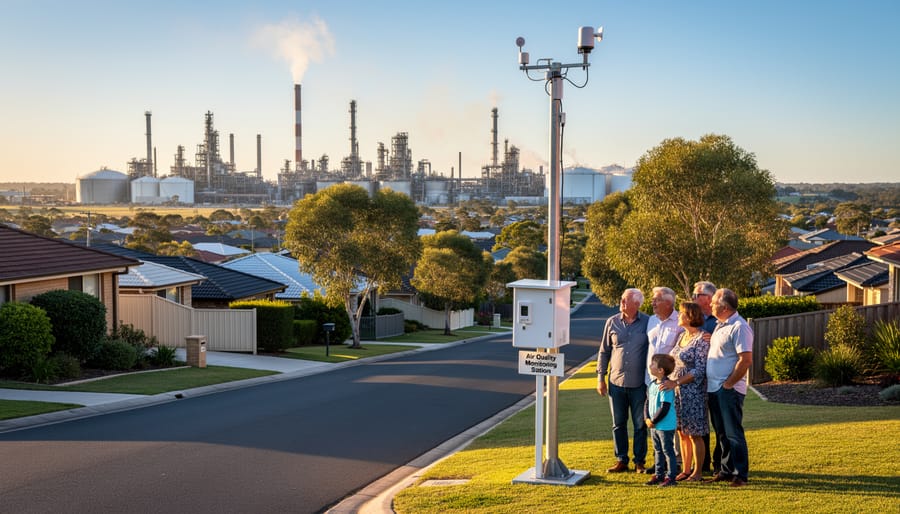
Right now, most Australian suburbs share a common blind spot when it comes to air quality. While our major cities have official monitoring stations operated by state environmental agencies, these are typically few and far between. Sydney, for instance, has roughly 40 government monitoring stations serving a population of over 5 million people spread across 12,000 square kilometres. That’s an enormous area for such limited coverage.
The problem becomes more apparent when you consider that air pollution isn’t evenly distributed. A government station might show healthy readings in one suburb, while residents just a few kilometres away unknowingly breathe poor quality air from local sources like busy roads, industrial areas, or bushfire smoke trapped by geography. These localized pollution events often go completely undetected by the sparse official network.
Perth residents in the southern corridor have experienced this firsthand, where monitoring gaps meant delayed warnings about industrial emissions affecting nearby homes. Similarly, communities near Melbourne’s port areas have long suspected air quality issues that official stations, located too far away, simply couldn’t capture.
This monitoring gap has serious implications for environmental health impacts, especially for vulnerable groups like children and elderly residents. Without accurate, hyperlocal data, communities can’t identify pollution hotspots, advocate for change, or make informed decisions about outdoor activities. That’s where community-led monitoring programs step in, filling these critical gaps with affordable, locally-placed sensors that provide real-time insights into the air we actually breathe.
Real Australian Communities Making a Difference
Across Australia, communities are taking charge of their air quality, and the results speak for themselves. These inspiring examples show that local action creates real change.
In Newcastle’s industrial areas, the Fern Street Community Group launched their own air monitoring initiative after residents noticed unusual dust and odours. Using low-cost sensors combined with EPA data, they’ve created a comprehensive picture of local air quality patterns. Their monthly community meetings now include air quality reports, and they’ve successfully advocated for stricter controls on nearby industrial operations. What started with twelve concerned residents has grown into a network of forty active monitors across the suburb, providing data that has influenced council planning decisions.
Port Adelaide’s journey began with persistent community concerns about port-related emissions. The Port Adelaide Environmental Action Team partnered with researchers from the University of South Australia to establish a monitoring network covering residential areas near shipping terminals. Their program combines scientific rigour with community engagement, training local volunteers to maintain equipment and interpret results. The data they’ve collected has led to meaningful dialogue with port operators and prompted improvements in dust suppression practices. Importantly, their success has inspired neighbouring communities to establish similar programs.
In Western Sydney, the Cumberland Council supported residents in establishing a grassroots monitoring network focused on traffic pollution near major roadways. Community members learned to use portable sensors during school drop-off times, revealing pollution hotspots that weren’t captured by official monitoring stations. This hyperlocal data helped the council prioritise tree planting locations and adjust traffic management strategies.
These communities prove that you don’t need huge budgets or technical expertise to start making a difference. With determination, collaboration, and the right tools, any Australian community can take meaningful steps toward cleaner air.
How Community Air Monitoring Networks Actually Work
Choosing the Right Monitoring Equipment
Selecting the right monitoring equipment is perhaps the most crucial decision your community will make, and the good news is there’s never been a better time to start. The air quality monitoring landscape has transformed dramatically in recent years, offering options for every budget and technical skill level.
Low-cost sensors, typically ranging from $200 to $500, have democratised air monitoring across Australia. Devices like the PurpleAir and AirBeam sensors measure particulate matter (PM2.5 and PM10) and are perfect for communities taking their first steps. These compact units can be mounted on homes or community buildings, providing real-time data that’s often accessible through smartphone apps. While they’re not laboratory-grade accurate, they’re excellent for identifying pollution patterns and hotspots in your neighbourhood. Australian suppliers like Envirosuite and Environmental Monitoring Systems stock various models suitable for community use.
Mid-range equipment, between $1,000 and $5,000, offers greater accuracy and can measure additional pollutants like nitrogen dioxide and ozone. These devices strike a balance between affordability and reliability, making them ideal for established programs seeking more comprehensive data.
For communities requiring research-grade precision, reference monitors costing upwards of $10,000 provide laboratory-standard measurements. While expensive, they’re sometimes available through partnerships with universities or local councils, who may already own equipment that communities can access.
Consider starting with a hybrid approach: deploy several low-cost sensors across your community to identify areas of concern, then advocate for more sophisticated monitoring in pollution hotspots. Many successful Australian programs, from Sydney’s inner west to Melbourne’s industrial suburbs, began exactly this way, growing their networks as community engagement and funding increased.
Setting Up Your Monitoring Sites
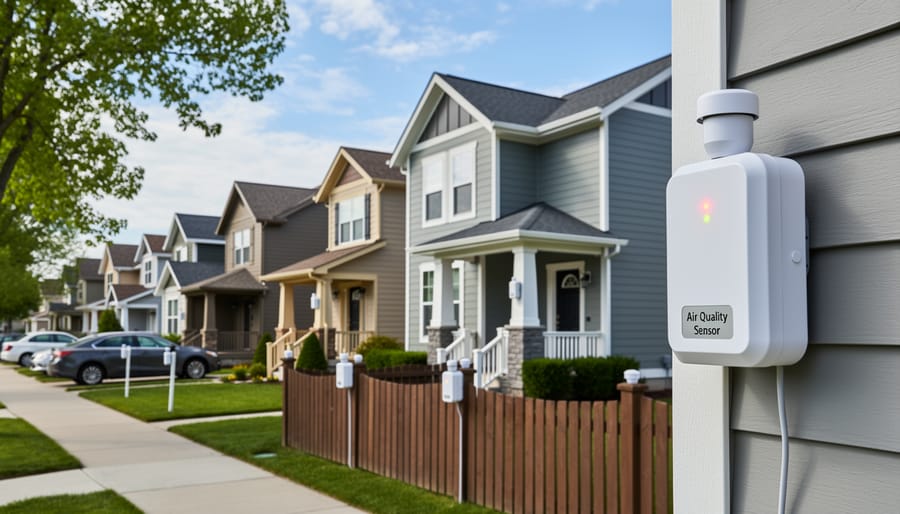
Getting your monitoring sites right is crucial for capturing accurate air quality data across your community. Start by thinking strategically about placement. You’ll want monitors near high-traffic areas, schools, industrial zones, and residential neighbourhoods to capture the full picture of local air quality. In Australian communities, considering proximity to bushfire-prone areas or agricultural operations can also provide valuable insights during smoke events or harvest seasons.
The number of monitors depends on your community’s size and diversity, but even starting with three to five devices can reveal significant patterns. A small suburb might begin with one monitor per square kilometre, while larger areas need strategic clustering around known pollution sources and vulnerable populations.
Finding willing hosts among residents is often easier than you’d expect. Many Australians are genuinely eager to contribute to environmental initiatives, especially when they understand the direct benefit to their neighbourhood’s health. Approach local schools, community centres, and engaged residents who have suitable outdoor spaces with power access. Make hosting simple by providing clear installation instructions, ongoing support, and regular updates about what the data reveals.
Data quality hinges on proper installation and maintenance. Ensure monitors are positioned at breathing height, away from direct obstructions, and protected from extreme weather. Establish a simple calibration schedule and create a roster of volunteers who can perform monthly checks. Regular community catch-ups help maintain enthusiasm while ensuring your monitoring network stays reliable and scientifically sound.
Collecting and Understanding Your Data
Once your monitoring stations are operational, establishing robust data collection and interpretation processes becomes your next priority. Most modern air quality sensors automatically log readings at regular intervals, typically every few minutes, storing data either locally or uploading it to cloud-based platforms. This continuous stream of information creates a valuable dataset that tells the story of your community’s air quality over time.
Proper data storage is essential. Many Australian community groups partner with universities or environmental organisations to ensure their data is securely housed and professionally validated. These partnerships bring credibility to your program while providing access to expertise that can identify patterns you might miss. For instance, researchers at several Australian universities have helped community groups distinguish between temporary pollution spikes from local events and concerning long-term trends requiring action.
Understanding your data requires looking beyond simple numbers. A reading of 25 micrograms per cubic metre of PM2.5 particles might seem abstract, but contextualising it against national air quality standards helps communities grasp what they’re seeing. Compare your readings with nearby official monitoring stations and look for patterns across different times of day or weather conditions.
Consider establishing a local data review committee that includes community members, scientists, and local council representatives. This collaborative approach ensures diverse perspectives in interpretation while building shared ownership of findings. Regular community meetings where data is presented visually through charts and maps make complex information accessible, transforming raw numbers into meaningful conversations about protecting your neighbourhood’s air quality.
Starting a Community Air Monitoring Program in Your Area
Building Your Core Team and Community Support
Building a successful air monitoring program starts with people who care, and chances are you’ve already got potential champions in your neighbourhood. Begin by connecting with existing community groups—residents’ associations, schools, environmental groups, or health networks. These established networks provide ready-made platforms for spreading the word and recruiting volunteers.
When approaching potential team members, focus on shared concerns rather than overwhelming technical details. Perhaps your neighbourhood sits near a busy road, or there’s uncertainty about local industrial emissions. These tangible, relatable issues naturally draw people in. Share your vision at community gatherings, post on local Facebook groups, and chat with neighbours at weekend markets. You’d be surprised how many Australians are keen to contribute when given a clear opportunity.
Create roles that suit different commitment levels. Not everyone can attend weekly meetings, but someone might excel at social media updates, while another person enjoys data entry or equipment maintenance. This flexibility keeps people engaged long-term without burning out your core team.
Regular communication is essential. Monthly gatherings—perhaps over coffee at a local café—help maintain momentum and celebrate progress. Share monitoring results through accessible channels like community newsletters or Instagram posts, showing real impact from your collective efforts.
Remember, successful community-led environmental action thrives on genuine relationships. Acknowledge contributions, welcome new ideas, and create space for everyone’s voice. When people feel valued and see their efforts making a difference, your program naturally sustains itself.

Finding Funding and Resources
Starting a community air monitoring program doesn’t have to break the bank, and there are numerous Australian funding avenues to explore. Many local councils across Australia offer environmental grants specifically for community-led initiatives. Check with your local council’s sustainability or environment department, as programs like Melbourne’s Sustainability Fund or Brisbane’s Community Grants regularly support air quality projects.
State and federal government grants present significant opportunities too. The Australian Government’s Environmental Restoration Fund and various state EPA programs often welcome applications from community groups focused on environmental monitoring. Keep an eye on the Community Environment Program, which has historically funded grassroots monitoring initiatives.
Universities can become invaluable partners, offering not just expertise but sometimes equipment loans and student volunteers eager for real-world research experience. Environmental science departments at universities like ANU, University of Melbourne, and UTS frequently collaborate with community groups, creating win-win situations where communities gain technical support while academics access valuable ground-level data.
Environmental organisations such as Clean Air and Urban Landscapes Hub or local conservation groups may provide seed funding, equipment sharing arrangements, or in-kind support through training and advocacy.
Don’t overlook crowdfunding platforms like Chuffed or GoFundMe, which have successfully funded Australian environmental projects. Your community’s collective passion for clean air can translate into financial backing when you share your story authentically. Consider also approaching local businesses committed to sustainability, many are keen to support community environmental initiatives as part of their corporate social responsibility.
Navigating Regulations and Working with Authorities
Working with environmental authorities doesn’t have to feel daunting. In Australia, air quality monitoring falls under state and territory Environmental Protection Authorities (EPAs), each with their own guidelines and reporting frameworks. Understanding these requirements from the outset will save your community group significant time and ensure your data carries weight when shared.
Start by contacting your local EPA early in the planning process. Most state EPAs are increasingly supportive of community monitoring initiatives, recognising the valuable role citizen science plays in environmental protection. In Victoria, for instance, the EPA has developed specific guidance for community air monitoring groups, while Queensland’s Department of Environment and Science offers resources for volunteer monitoring programs.
When sharing data with authorities, consistency and transparency are essential. Document your monitoring methods, equipment calibration, and quality assurance processes. This builds credibility and helps regulators understand how to interpret your findings. Many successful community groups schedule regular meetings with council environmental officers to present their data in accessible formats like graphs and maps.
Building constructive relationships means approaching authorities as partners rather than adversaries. Frame discussions around shared goals of improving local air quality. Your community’s lived experience and locally-gathered data can fill crucial gaps in official monitoring networks, particularly in areas between fixed monitoring stations. Some councils have even adjusted industrial permit conditions based on credible community monitoring evidence, demonstrating the real impact well-managed programs can achieve when regulatory relationships are collaborative and evidence-based.
Turning Air Quality Data Into Real Change
Using Data to Advocate for Your Community
Once you’ve gathered meaningful air quality data, it’s time to transform those numbers into real change for your community. Your monitoring results can become powerful tools for advocacy when presented strategically.
Start by packaging your findings into clear, visual formats that tell a story. Charts showing pollution spikes during peak traffic hours or comparisons with World Health Organization guidelines help councils and decision-makers quickly grasp the issue’s urgency. Many Australian community groups have successfully secured funding for green infrastructure by presenting data that highlighted specific pollution hotspots near schools and aged care facilities.
Engaging local media amplifies your message significantly. Prepare a simple fact sheet with your key findings, focusing on human impact rather than just technical measurements. Contact local journalists with a compelling angle, such as how air quality affects children’s health in nearby schools or connects to broader community wellbeing. Regional newspapers and community radio stations often welcome locally relevant environmental stories.
When presenting to councils, propose specific, actionable solutions backed by your data. Whether it’s advocating for additional street trees, improved cycling infrastructure, or revised traffic management, concrete recommendations demonstrate you’re promoting sustainable practices with evidence, not just raising concerns.
Build coalitions with health professionals, parent groups, and local businesses who share your clean air goals. Their voices, combined with your solid data, create compelling evidence-based campaigns that decision-makers find difficult to ignore. Remember, sustained advocacy often takes time, but persistent, data-driven community pressure has successfully improved air quality across numerous Australian suburbs.
Holding Polluters Accountable
Community air monitoring programs across Australia have proven their power to drive real change when polluters face the evidence gathered by concerned residents. These grassroots initiatives aren’t just about collecting data; they’re about creating accountability that protects our health and environment.
In Port Adelaide, community monitoring revealed air pollution levels from industrial facilities that exceeded safe limits during certain wind conditions. The data prompted the South Australian EPA to conduct its own investigations, ultimately leading to improved emissions controls and enhanced community notification systems when pollution events occur. Local residents reported noticeable improvements in air quality within months of these changes taking effect.
Similarly, communities near coal-fired power stations in the Hunter Valley have used air quality data to demonstrate the impact of coal dust on nearby neighbourhoods. Their persistent documentation led several mining companies to invest in water spraying systems, covered conveyor belts, and vegetation barriers that significantly reduced dust emissions. One community group successfully negotiated an air quality monitoring station placement that provides real-time data accessible to all residents.
In Western Sydney, community monitoring data complemented EPA enforcement actions against facilities violating air quality standards. The combination of official monitoring and community-gathered evidence strengthened regulatory responses, resulting in fines and mandatory upgrades to pollution control equipment.
These success stories demonstrate that when communities come together with reliable data, they become powerful advocates for cleaner air. Your monitoring efforts can spark similar transformations in your neighbourhood, holding polluters accountable and protecting the health of future generations.
The power to understand and improve the air we breathe is no longer confined to government agencies or research institutions. Across Australia, from suburban streets in Melbourne to coastal communities in Queensland, everyday people are proving that community air monitoring programs are not just achievable, they’re transformative. These grassroots initiatives are reshaping how neighbourhoods interact with their environment, turning passive concern into active stewardship.
What makes these programs truly remarkable is their ripple effect. When one street starts monitoring, neighbouring communities take notice. Data collected by residents in Perth has influenced local traffic management. School groups in Sydney have sparked conversations that led to meaningful policy changes. Each sensor installed, each reading shared, and each community meeting held contributes to a growing movement of environmental awareness and action.
Starting your own program might feel daunting, but remember that every successful initiative began with a single conversation between neighbours who cared. The technology is more accessible than ever, the networks of support are growing stronger, and the Australian communities already engaged in this work are eager to share their knowledge.
Your community’s air quality journey can begin today. Whether you’re exploring the possibility of launching a new program or seeking to connect with existing networks, the most important step is simply starting. Together, Australian communities are breathing new life into environmental action, one neighbourhood at a time. The question isn’t whether you can make a difference, it’s when you’ll begin.