
Australia’s coastline faces an urgent challenge: rising sea levels, intensifying storms, and eroding beaches are transforming the places we call home. From the Gold Coast’s beloved beaches to Sydney’s harbour foreshores and Melbourne’s bayside suburbs, coastal communities are witnessing changes that demand immediate attention and thoughtful response.
Coastal adaptation isn’t about accepting defeat—it’s about working together to protect what matters most. Across Australia, innovative communities are already leading the way, implementing practical solutions that safeguard homes, preserve ecosystems, and maintain the lifestyle we cherish. In Byron Bay, local groups are restoring coastal dunes while adapting infrastructure. Melbourne’s Port Phillip Bay communities are piloting nature-based defences that protect shorelines while creating habitat for native species. These aren’t distant future scenarios; they’re happening now, in your backyard.
Understanding coastal adaptation means recognizing that our relationship with the ocean is evolving. The science is clear: Australian coastlines will continue changing, with projections showing significant impacts within our lifetimes. Yet this knowledge empowers rather than paralyzes. When communities grasp what’s happening and why, they can make informed decisions about protecting their properties, supporting local initiatives, and influencing policy directions that prioritize long-term resilience over short-term fixes.
This article explores how coastal adaptation works in practice, showcasing real Australian success stories and examining the policies shaping our response. You’ll discover what’s being done, what science tells us about effective strategies, and most importantly, how you can contribute to building resilient coastal communities. Whether you live on the coast or simply value Australia’s extraordinary shorelines, understanding coastal adaptation is the first step toward meaningful action.
What Coastal Adaptation Really Means for Australia
The Triple Threat: Sea-Level Rise, Erosion, and Extreme Weather
Australia’s coastline faces a perfect storm of interconnected threats that are reshaping our beaches, communities, and way of life. Understanding how these forces work together is the first step toward meaningful adaptation.
Sea-level rise is the slow-burning threat. Australian Bureau of Meteorology data shows our sea levels have risen by over 20 centimetres since 1900, with projections pointing to another 17 to 58 centimetres by 2090 under moderate scenarios. This might sound gradual, but it’s already making high tides reach further inland and increasing the frequency of coastal flooding.
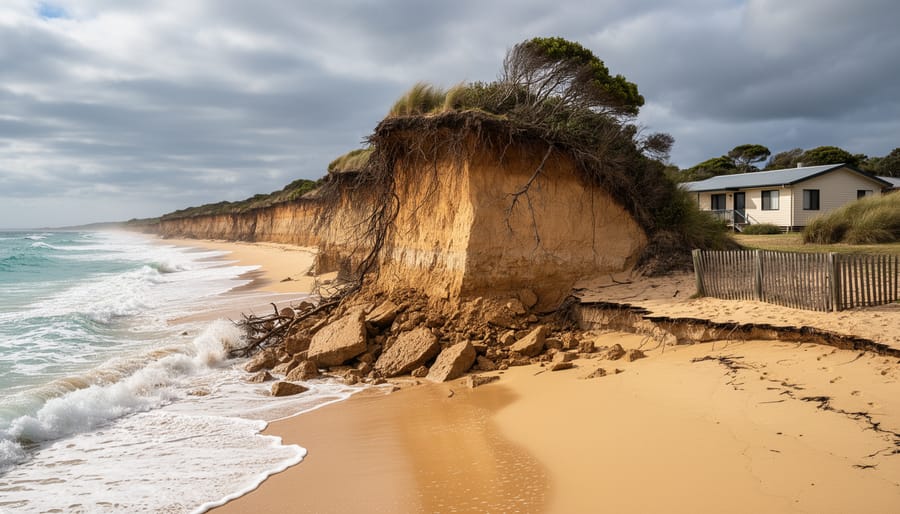
Coastal erosion accelerates these climate impacts. Rising seas eat away at our beaches and dunes, while stronger wave action reshapes coastlines faster than ever before. Many beloved Australian beaches have lost metres of sand in recent decades, with some iconic spots shrinking by up to 50 metres.
Then there’s extreme weather, the wildcard that turns chronic problems into acute crises. When cyclones, storm surges, or king tides coincide with already elevated sea levels and weakened coastal buffers, the damage multiplies. The extreme weather impacts we’re witnessing across Australia demonstrate this compounding effect.
Here’s the crucial part: these three threats don’t just add together, they multiply each other’s effects. Higher seas mean erosion reaches further inland. Eroded beaches offer less protection during storms. And extreme weather events accelerate both processes simultaneously, creating challenges our coastal communities must address collectively.
Why Waiting Isn’t an Option Anymore
Australia’s coastline is changing faster than anticipated, and the window for proactive adaptation is narrowing. Recent events paint a clear picture: coastal erosion along Sydney’s northern beaches accelerated dramatically in 2023, with some areas losing metres of sand in single storm events. Byron Bay’s iconic beachfront businesses now face regular inundation, and Brisbane’s foreshore suburbs experienced their most severe flooding on record just recently.
Here’s the opportunity: communities acting now are discovering innovative solutions that actually improve their quality of life. Port Phillip Bay councils are transforming vulnerable areas into thriving wetlands that double as recreational spaces. Gold Coast residents are pioneering living shorelines that protect homes while creating new habitats for marine life.
The difference between communities adapting today versus those waiting is becoming stark. Early adopters are accessing grants, building resilience, and even increasing property values through smart design. Those delaying face escalating costs and fewer options as insurance premiums rise and natural buffers disappear.
Climate models show we’re already experiencing conditions not expected until 2040. The good news? Australian ingenuity is rising to meet this challenge, and every community choosing to act today becomes a blueprint for others to follow.
Current State of Australia’s Coastal Climate Science
What the Data Tells Us About Our Coastline’s Future
The science is clear, and the numbers paint a vivid picture of what lies ahead for our Australian shores. Recent research from CSIRO and the Bureau of Meteorology shows that sea levels around Australia are rising at roughly 3 millimetres per year, with some regions experiencing even faster changes. By 2100, depending on global emissions pathways, we could see rises between 0.4 and 1.1 metres along different parts of our coastline.
What makes this particularly relevant for everyday Australians is how these changes vary across our vast shoreline. Queensland’s Gold Coast and northern New South Wales face heightened erosion risks, with some beaches already retreating by several metres annually. Meanwhile, South Australia’s gulf regions are experiencing slower but steady encroachment, and Western Australia’s coastline shows localised vulnerability around Perth’s metropolitan beaches.
The data also reveals patterns in extreme weather events. Coastal flooding that once occurred every hundred years is now projected to happen every decade in some areas. King tides, which previously caught communities off guard, are becoming more frequent and severe, particularly along our eastern seaboard.
But here’s what the research also tells us: we have time to act, and adaptation strategies work. Communities that have implemented coastal management plans are seeing measurable success in protecting infrastructure and preserving beach systems. The data shows that for every dollar invested in proactive coastal adaptation, communities save an average of four dollars in avoided damages.
Understanding these projections isn’t about doom and gloom. It’s about empowering ourselves with knowledge to make informed decisions about protecting the coastal places we love, whether that’s supporting local council adaptation plans or rethinking development in vulnerable areas.
Regional Hotspots: Where Australia’s Coast Is Most Vulnerable
Australia’s coastline tells different stories depending on where you look, but some regions are writing particularly urgent chapters in our coastal adaptation narrative.
Southeast Queensland faces a perfect storm of challenges. The Gold Coast, with its iconic beaches and densely developed shoreline, is experiencing accelerated erosion and increased flooding during king tides. Brisbane’s bayside suburbs are grappling with similar pressures, compounded by water management challenges as saltwater intrusion threatens freshwater systems.
Northern New South Wales communities, from Byron Bay to Port Macquarie, are already seeing properties at risk. Recent storms have exposed the vulnerability of beachfront infrastructure, prompting difficult conversations about managed retreat versus protection.
Sydney’s northern beaches and Botany Bay area face mounting pressure from both sea-level rise and population growth. The city’s extensive harbour foreshore adds complexity to adaptation planning, with different microclimates requiring tailored solutions.
In South Australia, Adelaide’s metropolitan coastline and the low-lying areas around Gulf St Vincent are particularly exposed. These regions combine residential development with critical ecosystems that need protection.
Tasmania’s east coast communities, while facing slower change, aren’t immune. Hobart’s waterfront and regional centres like Triabunna are monitoring rising waters closely.
Does your community feature here? Check your local council’s coastal hazard mapping to understand your specific risks and join community discussions about adaptation strategies. Collective action starts with awareness.
How Australian Communities Are Adapting Right Now
Nature-Based Solutions: Working With the Coast, Not Against It
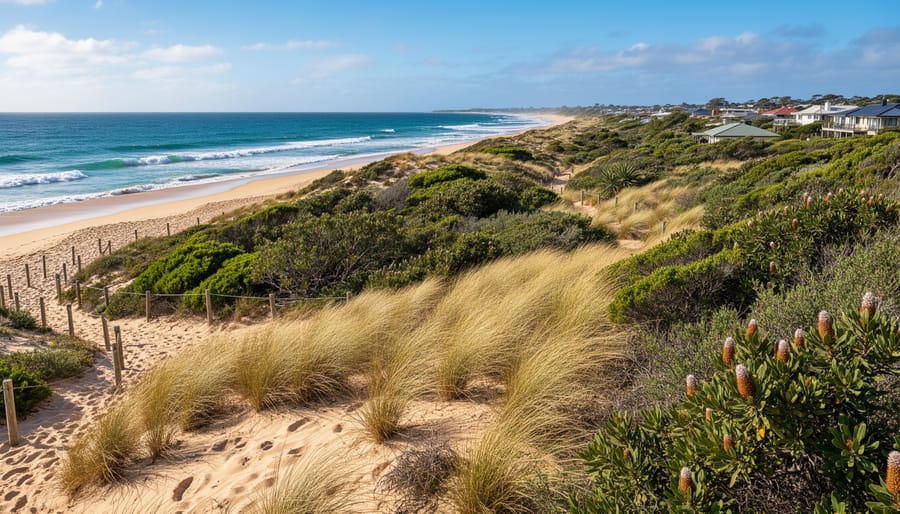
Australia’s coastal communities are increasingly embracing nature’s own defence systems, recognising that beaches, dunes, and coastal vegetation are our first line of protection against rising seas and intensifying storms. These innovative approaches work with natural processes rather than fighting against them.
Along Queensland’s coastline, communities are restoring coastal dunes by planting native vegetation like spinifex and coastal wattle. These plants stabilise sand, absorb wave energy, and create wildlife habitat simultaneously. The results speak for themselves: healthier beaches that naturally rebuild after storms while providing homes for threatened shorebirds.
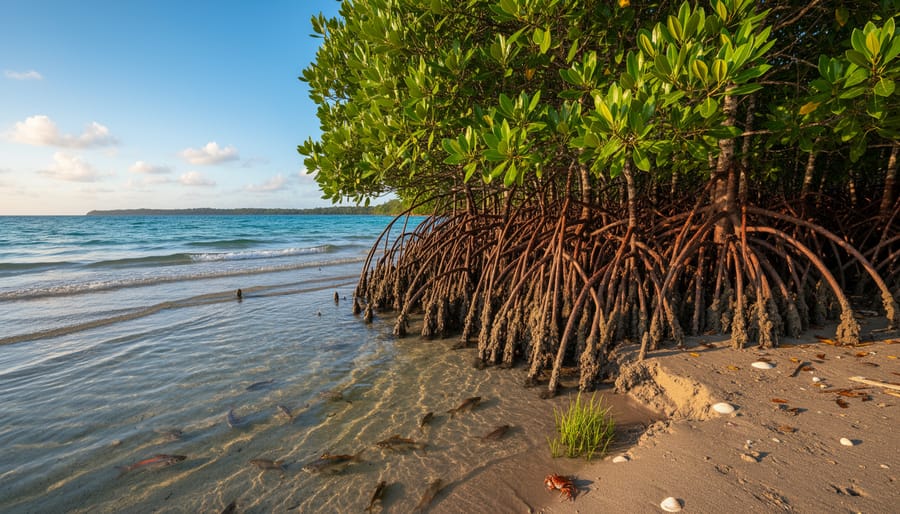
In northern Australia, mangrove protection projects are showing remarkable success. These coastal forests act as natural buffers, reducing wave height by up to 66 percent while storing vast amounts of carbon and supporting fisheries that local communities depend on. Towns like Darwin and Cairns are investing in mangrove restoration, recognising these ecosystems as infrastructure that maintains itself.
Living shorelines are gaining traction in places like Port Phillip Bay, where oyster reefs and saltmarsh are being restored to replace failing concrete walls. These hybrid solutions combine natural elements with minimal hard structures, creating dynamic systems that adapt to changing conditions.
The environmental co-benefits are substantial: improved water quality, increased biodiversity, carbon sequestration, and enhanced recreational spaces. Best of all, these solutions often cost less than traditional infrastructure while delivering multiple benefits that concrete simply cannot match.

Built Infrastructure: Engineering Our Way to Resilience
Across Australian coastlines, communities are increasingly turning to built infrastructure to create defensive barriers against rising seas and intensifying storms. From the Gold Coast to Perth, seawalls and levees are being reinforced and reimagined, while innovative engineering solutions are emerging that go beyond simply holding back the ocean.
In Newcastle, elevated residential buildings now stand on specially designed foundations that allow floodwaters to pass beneath living spaces, protecting homes while acknowledging that water will come. Meanwhile, communities in South East Queensland are investing in hybrid approaches that combine traditional seawalls with nature-based solutions like constructed wetlands that absorb storm surge energy before it reaches built structures.
These engineering solutions work best in high-density urban areas where property values justify the significant investment, and where the concentration of infrastructure makes retreat impractical. The Barangaroo development in Sydney demonstrates how new coastal precincts can incorporate sea-level rise projections from the design phase, using elevated platforms and resilient materials throughout.
However, built infrastructure isn’t a universal solution. These approaches require ongoing maintenance, can be prohibitively expensive for smaller communities, and sometimes simply transfer erosion problems to neighbouring areas. The reality facing many Australian coastal councils is determining where to invest in protection and where to explore alternatives.
What’s emerging is a more nuanced understanding that effective coastal adaptation often combines engineering solutions with natural systems and strategic planning. The key is matching the right approach to each unique coastal location, considering both immediate protection needs and long-term sustainability for the communities we’re building to last.
Managed Retreat: The Tough Conversations Communities Are Having
Perhaps no coastal adaptation strategy sparks more difficult conversations than managed retreat—the planned relocation of homes, businesses, and infrastructure away from vulnerable coastlines. It’s a topic that touches the deepest parts of our identity, challenging our connection to place and the dreams we’ve built by the sea.
Across Australia, these conversations are beginning, though they’re never easy. Byron Bay has openly discussed long-term relocation options for some beachfront areas, while parts of the Gold Coast are evaluating which properties might eventually need to move. These aren’t distant theoretical discussions—they’re real communities grappling with heartbreaking decisions about their futures.
What makes managed retreat so complex is that it’s not just about moving buildings. It’s about acknowledging that some beloved coastal places might not be defendable forever, no matter how much we invest in seawalls or sand replenishment. For many residents, their beachside home represents generational wealth, childhood memories, and deep community bonds.
The communities approaching this most successfully are those starting conversations early, ensuring property owners understand their long-term risks, and creating fair compensation frameworks. Some councils are exploring land swaps, buyback schemes, and gradual transition periods that span decades rather than years.
While managed retreat remains controversial, proactive planning now means communities can make these decisions thoughtfully and equitably, rather than being forced into crisis-driven evacuations as climate impacts intensify. It requires courage, compassion, and honest dialogue about the coast we’re living with.
The Policy Landscape: What’s Driving Coastal Adaptation in Australia
Who’s Responsible? Understanding Government Roles
Navigating coastal adaptation in Australia means understanding who holds the reins at different levels. Here’s the good news: multiple layers of government are working together, though knowing who does what helps you direct your voice effectively.
Federal government sets the big picture through national climate policy, coastal research funding, and disaster recovery support. They provide frameworks like the National Climate Resilience and Adaptation Strategy and fund essential climate science through CSIRO and the Bureau of Meteorology. When cyclones hit or major flooding occurs, federal disaster payments kick in.
State and territory governments develop coastal management policies, marine planning zones, and building codes specific to your region. They’re responsible for coastal planning legislation and often manage major infrastructure projects like seawalls or beach nourishment programs. Each state approaches this differently—Queensland has its coastal plan, while Victoria has its own framework.
Local councils are your frontline champions, implementing adaptation at the community level. They manage local beaches, approve development applications considering sea level rise, maintain coastal infrastructure, and develop local adaptation plans. Your council likely knows your stretch of coastline better than anyone.
This shared responsibility means collaboration is essential but can sometimes create gaps. When you’re advocating for change or seeking information, start local—your council often has the most immediate influence—then work upward if needed. Community groups increasingly bridge these levels, ensuring coastal voices reach decision-makers at every tier. Understanding this structure empowers you to engage effectively and hold the right bodies accountable.
Funding Mechanisms: How Adaptation Projects Get Paid For
Securing funding for coastal adaptation projects might seem daunting, but Australian communities and businesses have access to a growing range of financial support options that make protection possible.
At the federal level, the Australian Government’s Emergency Response Fund and Disaster Ready Fund allocate millions annually toward building community resilience, with coastal adaptation projects eligible for grants. The National Climate Resilience and Adaptation Strategy also directs funding toward vulnerable coastal regions. State governments run their own programs too – Victoria’s Marine and Coastal Grant Program and Queensland’s Coastal Hazard Adaptation Strategy both provide targeted support for local initiatives.
Local councils often partner with communities through co-funding arrangements, where they match contributions from residents or businesses. This collaborative approach has helped fund seawall upgrades, dune restoration, and stormwater improvements across coastal towns from Byron Bay to Broome.
For businesses, green finance options are expanding rapidly. Major Australian banks now offer sustainability-linked loans with favorable rates for climate adaptation projects. Insurance companies increasingly recognize adaptation investments, sometimes offering premium reductions for properties with documented protection measures.
Community groups shouldn’t overlook philanthropic grants either. Organizations like the Ian Potter Foundation and Gandel Foundation regularly support environmental projects, while crowdfunding platforms have successfully raised funds for local beach restoration and wetland conservation.
The key is starting early and building partnerships. Successful funding applications typically combine multiple sources, demonstrate community support, and show clear environmental and economic benefits. Many regional Natural Resource Management bodies offer free advice on navigating funding opportunities, making the process less overwhelming for first-timers.
What You Can Do: Actions for Individuals and Communities
For Coastal Residents: Protecting Your Property and Community
Living on Australia’s stunning coastline comes with unique responsibilities, but protecting your property and community doesn’t have to be overwhelming. Start with simple modifications: elevate air conditioning units and electrical systems, install flood vents in enclosed areas, and consider permeable paving to reduce runoff. Native coastal vegetation like spinifex and coastal wattles create natural buffers while providing habitat for local wildlife.
Beyond your property line, community engagement amplifies impact. Join your local Coastcare group to participate in dune restoration projects, or connect with neighbours to develop shared evacuation plans and emergency communication networks. Many coastal councils run workshops on climate adaptation where you can learn from experts and fellow residents.
Consider advocating for nature-based solutions in your area, such as maintaining mangrove forests and seagrass beds that protect shorelines naturally. Share knowledge with your community through social media groups or neighbourhood gatherings. Document coastal changes you observe and report them to local environmental monitoring programs.
Remember, resilience is built collectively. When coastal residents work together, combining individual property improvements with community-wide initiatives, we create stronger, more adaptable places to call home. Your actions today help ensure these precious coastal communities thrive for generations to come.
For Everyone: Supporting Coastal Resilience From Anywhere
You don’t need to live by the coast to make a difference in coastal adaptation efforts. Every Australian can play a vital role in supporting our coastal communities as they navigate the challenges of climate change.
One of the most powerful actions you can take is advocacy. Contact your local and federal representatives to express support for robust coastal adaptation policies and funding. Share stories from coastal communities on social media to raise awareness about the real impacts of sea-level rise and erosion. Your voice amplifies the urgency of this issue beyond shoreline boundaries.
Your everyday sustainable choices directly impact coastal resilience too. Reducing your carbon footprint through energy efficiency, sustainable transport, and mindful consumption helps slow climate change at its source. Supporting businesses committed to environmental responsibility creates market demand for climate action.
Consider directing your tourism dollars to coastal communities investing in adaptation measures, and choose accommodation providers with strong environmental credentials. Many coastal towns rely on tourism, and your support helps them fund resilience projects.
Finally, look for opportunities to contribute to coastal restoration initiatives. Some organisations coordinate volunteer programs for dune revegetation and coastal clean-ups that welcome participants from anywhere in Australia. Together, we’re all part of the solution.
Across Australia’s 60,000 kilometres of coastline, coastal adaptation isn’t a distant concept—it’s happening right now in communities just like yours. From Byron Bay’s nature-based solutions to Perth’s urban reef systems, Australians are already reimagining how we live with our changing coast. This isn’t just the work of scientists and policymakers; it’s driven by surf clubs adapting their facilities, local councils engaging residents in coastal planning, and businesses investing in resilient infrastructure. Every Australian has something to contribute, whether through participating in community consultations, supporting local adaptation projects, or simply staying informed about coastal changes. Our nation has always thrived on innovation and community spirit, and coastal adaptation is where these strengths shine brightest. Together, we’re not just protecting beaches and properties—we’re safeguarding the coastal heritage that defines Australian life for our children and grandchildren. The challenge is real, but so is our capacity to meet it.