
Check your local air quality forecast before planning outdoor activities, particularly during summer months when ozone levels peak between 10am and 4pm. Download the AirRater app or visit your state EPA website to receive real-time alerts when ozone concentrations exceed safe thresholds in your area.
Reduce your contribution to ozone formation by limiting car trips during hot days, refueling your vehicle after sunset, and postponing lawn mowing or using petrol-powered equipment until cooler evening hours. These small changes collectively reduce the nitrogen oxides and volatile organic compounds that create ground-level ozone.
Create an indoor sanctuary during poor air quality days by keeping windows closed, running air conditioning with clean filters, and avoiding strenuous exercise outdoors when ozone alerts are active. Vulnerable groups including children, elderly Australians, and those with respiratory conditions should take extra precautions.
Understanding ozone pollution empowers you to protect your family and community. Unlike the protective ozone layer high in our atmosphere, ground-level ozone forms when vehicle emissions, industrial pollutants, and household chemicals react with sunlight. Australia’s intense UV radiation and hot summers create ideal conditions for this invisible threat, making it one of our most pressing environmental challenges.
You cannot see or smell ozone, yet it impacts millions of Australians annually. Sydney, Melbourne, and Perth regularly experience elevated ozone levels during warmer months, affecting respiratory health and ecosystem vitality. But here is the encouraging news: community action works. When we understand how ozone forms and take collective steps to reduce emissions, we create measurable improvements in our air quality. This guide equips you with the knowledge and practical tools to make that difference, starting today in your own backyard.
What Makes Ozone Different from Other Air Pollutants
The Sunlight Connection: Why Ozone Peaks on Beautiful Days
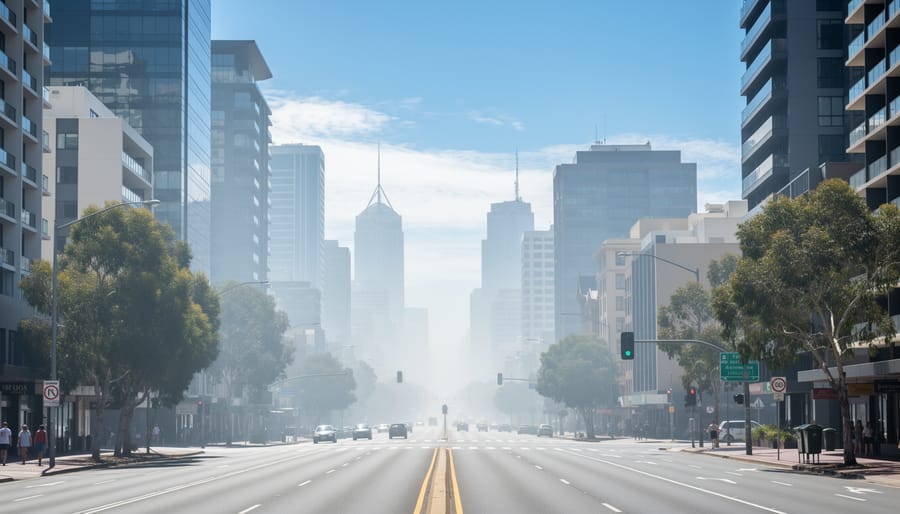
Here’s something that catches many Australians by surprise: those gorgeous blue-sky days we treasure are actually when ozone pollution reaches its peak. It seems counter-intuitive, doesn’t it? We associate pollution with grey, hazy skies, yet ozone tells a different story.
The science behind this pattern is fascinating. Ozone forms when vehicle exhaust and industrial emissions react with sunlight through a chemical process called photochemical smog formation. Think of sunlight as the catalyst that transforms ordinary pollutants into ground-level ozone. The stronger and longer the sunshine, the more ozone develops in the air we breathe.
This creates a genuine dilemma for communities across Australia. Those perfect summer days when families head to the beach, children play sport outdoors, and we fire up the barbecue are precisely when ozone levels climb highest. In cities like Sydney, Melbourne, and Brisbane, air quality monitors consistently record peak ozone concentrations during still, sunny afternoons, particularly in our warmer months.
The pattern intensifies during heatwaves, when stagnant air prevents pollutants from dispersing. Without wind or clouds to break up the chemical reactions, ozone concentrations can build throughout the day, typically peaking between midday and early evening.
Understanding this sunlight connection empowers us to make smarter choices about when and how we spend time outdoors. It also highlights why collective action on reducing vehicle emissions and supporting cleaner energy matters so much for protecting those beautiful Australian days we all cherish.
Where Ozone Comes From in Australian Cities
Understanding where ozone comes from helps us tackle the problem at its source. In Australian cities, ground-level ozone forms when nitrogen oxides and volatile organic compounds react in sunlight, creating a uniquely challenging situation for our sun-drenched continent.
Motor vehicles remain the primary culprit, contributing roughly 60% of nitrogen oxides in our urban areas. Every time we drive, especially during peak hour traffic, our cars release these precursor pollutants that later transform into ozone on hot, still days.
Industrial facilities, including power stations, manufacturing plants, and refineries, add another significant layer to the mix. These operations release both nitrogen oxides and volatile organic compounds through their processes, particularly affecting communities near industrial corridors in cities like Melbourne, Sydney, and Brisbane.
What makes Australia distinctive is the impact of bushfire smoke. During our increasingly intense fire seasons, smoke plumes carry massive amounts of ozone precursors across our cities, sometimes elevating pollution levels for weeks at a time. This natural source, amplified by climate change, compounds our urban air quality challenges.
Even household products like paints, solvents, and cleaning supplies contribute volatile organic compounds, reminding us that solutions require action at every level of our community.
Health Impacts You Need to Know About

Who’s Most at Risk in Your Community
Ozone pollution doesn’t affect everyone equally, and understanding who faces the greatest risk in your community can help us better protect those most vulnerable.
Children are particularly susceptible because their lungs are still developing and they breathe more rapidly than adults. School playgrounds and sports fields during high-ozone days can expose young Australians to harmful levels, especially during afternoon peak ozone periods. If you’ve noticed schools rescheduling outdoor activities on hot summer days, this is why.
Outdoor workers face prolonged exposure during their shifts, making construction crews, landscapers, postal workers, and agricultural staff especially vulnerable. In regional Australia, these workers often operate in areas with limited air quality monitoring, unaware of rising ozone levels.
Athletes and fitness enthusiasts who exercise outdoors during peak heat hours inadvertently increase their risk, breathing deeper and faster while ozone concentrations climb.
Indigenous communities in remote and regional areas face compounded challenges. Many lack access to real-time air quality information or adequate healthcare facilities to manage ozone-related health impacts. Combined with existing health inequities, this creates a concerning vulnerability gap.
People with existing respiratory conditions like asthma or chronic obstructive pulmonary disease experience worsened symptoms on high-ozone days, while older Australians and those with cardiovascular conditions also face heightened risks.
Understanding these vulnerabilities helps us take protective action as a community. Whether you’re a parent, employer, sports coach, or simply a concerned neighbour, recognising when and how ozone affects different groups enables us to look out for one another during high-risk periods.
Long-Term Effects Versus Short-Term Exposure
Understanding how ozone affects us differently over time is crucial for protecting ourselves and our communities. When we talk about ozone exposure, Australian health researchers distinguish between two key scenarios that impact our wellbeing in distinct ways.
Short-term or acute exposure occurs during high ozone days, typically in summer when conditions are perfect for ozone formation. Even a single day of elevated ozone levels can trigger immediate responses. According to research from Australian metropolitan areas, emergency department visits for asthma increase by up to 7% on days when ozone levels spike. You might experience chest tightness, coughing, or difficulty breathing during your morning walk, particularly if you’re exercising outdoors between 11am and 5pm when ozone peaks.
Long-term or chronic exposure tells a different story. Australian studies tracking communities over several years reveal more concerning patterns. People living in areas with consistently elevated ozone levels, even when below national standards, show reduced lung function over time. Children growing up in these environments face particular risks, with research from Sydney and Melbourne showing increased rates of asthma development and reduced lung capacity that can persist into adulthood.
The National Health and Medical Research Council notes that chronic exposure may accelerate lung aging and worsen existing respiratory conditions. What’s particularly important for our communities is that these long-term effects accumulate gradually, often without obvious symptoms until significant damage has occurred. This makes monitoring local air quality and taking preventive action essential, even on days when the air seems perfectly fine.
How Australia Monitors and Reports Ozone Levels
Understanding Your Local Air Quality App
Checking your local air quality has never been easier, thanks to user-friendly platforms developed by Australian environmental authorities. The most comprehensive resource is the Australian Air Quality Group website, which consolidates data from monitoring stations across the country. Simply enter your postcode or suburb to see real-time ozone readings and forecasts for the coming days.
Each state also maintains its own air quality monitoring system. Victorians can access EPA Victoria’s AirWatch, while New South Wales residents benefit from the NSW Department of Planning and Environment’s air quality index. Queensland offers the Queensland Government Air Quality Monitoring Network, and Western Australians can check the Department of Water and Environmental Regulation’s air quality data portal.
These platforms use colour-coded systems ranging from green (good) to purple (hazardous), making it instantly clear whether outdoor activities are safe. Most services also offer free email or SMS alerts when ozone levels spike in your area, helping you plan your day around air quality conditions. Download your state’s EPA app to receive push notifications and access air quality information on the go. By regularly checking these resources, especially during summer months when ozone formation peaks, you’re taking an important step toward protecting your health and that of your community.
Reading the Numbers: What Do Ozone Levels Actually Mean
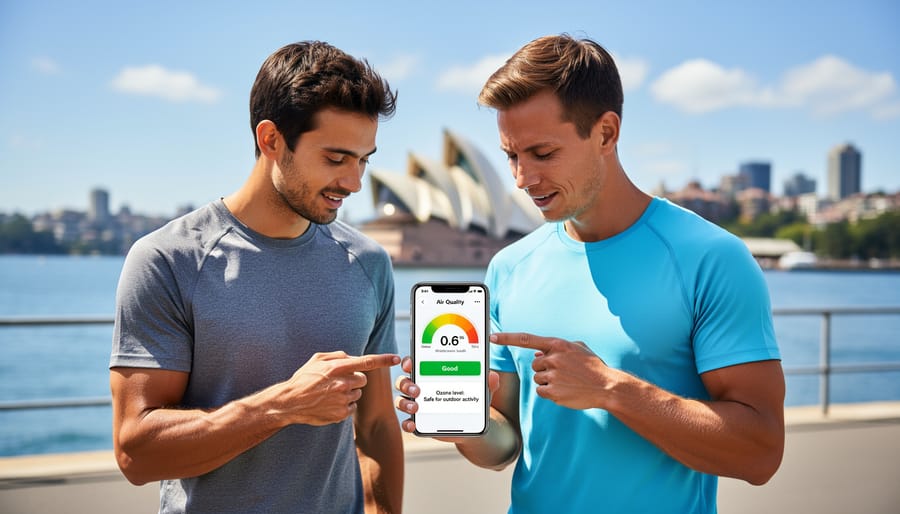
Understanding ozone readings doesn’t require a science degree, but it does help to know what the numbers mean for your daily life. In Australia, we typically measure ground-level ozone in parts per million (ppm), though you’ll also see the Air Quality Index (AQI) used in forecasts.
Think of ppm as counting ozone molecules among a million air molecules. When ozone levels sit below 0.07 ppm, the air quality is generally good, and most Australians can enjoy outdoor activities without concern. Between 0.07 and 0.10 ppm marks moderate levels, where sensitive groups like children, older adults, and those with respiratory conditions might want to reduce prolonged outdoor exertion, particularly during peak afternoon hours.
The AQI translates these measurements into simpler categories ranging from 0 to 200-plus. An AQI below 50 means excellent conditions for that morning run or community cricket match. Between 51 and 100 is satisfactory for most people. Once readings climb above 100, it’s time to reconsider intense outdoor activities, especially if you’re in a vulnerable group.
Here’s a practical example: if your local forecast shows an AQI of 120 on a scorching January afternoon in Sydney or Melbourne, consider shifting that planned soccer game to early morning or late evening when ozone levels naturally drop. Indoor alternatives become your friend on these higher-reading days. Many Australian communities now include ozone forecasts in their daily weather updates, making it easier to plan activities that protect your health while staying active.
Australian Ozone Standards and Policy Framework
How Your State Manages Ozone Pollution
Across Australia, states are taking varied approaches to tackle ozone pollution, with some exciting community-driven initiatives leading the way. In New South Wales, the EPA runs a comprehensive air quality monitoring network that tracks ozone levels in real-time, helping residents make informed decisions about outdoor activities on high-pollution days. They’ve partnered with local councils to promote tree-planting programs, recognising that urban greening naturally reduces ozone precursors.
Victoria has embraced innovative community engagement through neighbourhood clean air forums, where residents collaborate with scientists to identify local pollution hotspots and develop tailored solutions. Queensland’s focus has been on educating businesses about reducing volatile organic compound emissions, with a grant program supporting small enterprises transitioning to low-emission practices.
South Australia and Western Australia have pioneered regional partnerships between councils, bringing together communities to share resources and strategies for reducing transport emissions during summer months when ozone risks peak. Tasmania, while experiencing lower ozone levels overall, has been proactive in monitoring trends and preparing communities for future challenges.
What’s particularly encouraging is how these state programs increasingly recognise that effective ozone management isn’t just about regulation—it’s about empowering communities to take collective action and create healthier environments together.
Where Australian Standards Fall Short (and Where They Excel)
Australia’s approach to ozone air quality shows both promise and room for improvement. Our national standards currently sit higher than World Health Organization guidelines, with our one-hour average of 0.10 parts per million exceeding WHO’s recommended 0.06 ppm. This means Australians may be exposed to higher ozone levels than global health experts consider safe, particularly during our scorching summer months when ozone formation peaks.
Where we excel, however, is in our comprehensive monitoring network and transparent reporting systems. Australian cities benefit from real-time air quality data that’s freely accessible to communities, empowering residents to make informed decisions about outdoor activities. Our state-based initiatives, like Victoria’s smog alerts and New South Wales’ Air Quality Index, demonstrate strong public communication efforts.
The gap lies in our regulatory response. While we’re brilliant at measuring the problem, our emission standards for vehicles and industrial sources lag behind European and Californian benchmarks. The encouraging news? Growing community pressure and successful local initiatives are driving change. Several Australian councils are pioneering tree-planting programs and green transport schemes that directly address ozone precursors, showing that grassroots action can complement policy reform.
What You Can Do to Reduce Ozone Pollution
Small Changes That Make a Real Difference
You don’t need to overhaul your entire lifestyle to improve ozone air quality in your community. Simple shifts in daily habits create meaningful change when we all participate.
Start by rethinking when you refuel your car. Petrol vapours are a major source of VOCs that form ground-level ozone, so fill up during cooler evening hours rather than the heat of the day. This small timing adjustment reduces the amount of vapours that evaporate and contribute to ozone formation.
On days when air quality apps predict high ozone levels, consider catching the train or bus instead of driving. Even one day less per week makes a difference, and many Australian cities now offer improved public transport networks making this easier than ever.
When shopping for household products, look for low-VOC alternatives. Australian brands like Enviro Care and Ecostore offer cleaning products, paints, and personal care items with minimal volatile organic compounds. Check labels for phrases like “low VOC” or “zero VOC” when selecting paints at Bunnings or Mitre 10. These products work just as effectively without releasing harmful chemicals into the air.
Around your home, choose electric or manual garden tools over petrol-powered ones when possible. If you’re using a lawnmower on a hot summer day, you’re contributing to the same chemical reactions that create ground-level ozone.
The beauty of these actions is their simplicity. You’re not being asked to sacrifice comfort or convenience. Rather, you’re making conscious choices that protect your family’s health while supporting cleaner air for all Australians. When thousands of us make these small adjustments, the collective impact becomes remarkable.

How Australian Businesses Are Leading the Way
Across Australia, forward-thinking businesses and communities are proving that reducing ozone precursors is both achievable and beneficial. Take Melbourne’s City Council, which partnered with local transport companies to transition their fleet to electric vehicles, cutting nitrogen oxide emissions by 40% in just two years. The program also created new green jobs and improved air quality in high-traffic zones.
In Sydney’s western suburbs, a manufacturing precinct collaborated to install solar panels and upgrade equipment, significantly reducing volatile organic compound emissions. Their success demonstrates how collective action creates measurable change. These Australian business case studies show the financial benefits too—many participants reported reduced energy costs within the first year.
Community initiatives are equally inspiring. Brisbane’s car-free Sundays initiative has gained momentum, with neighborhoods closing streets to traffic monthly, encouraging walking and cycling. Meanwhile, Adelaide’s community gardens network promotes local food production, reducing transport emissions and strengthening neighborhood connections.
These examples prove that whether you’re running a business or leading a community group, you have the power to improve ozone air quality while building a stronger, more sustainable future for your local area.
Protecting Your Family on High Ozone Days
When high ozone days are forecast across Australian cities, simple adjustments to your family’s routine can make a real difference to everyone’s wellbeing. Check your local air quality index each morning, particularly during summer when ozone levels peak between late morning and early evening. If you’re planning outdoor exercise or children’s sports, shift these activities to early morning or after sunset when ozone concentrations naturally drop.
For vulnerable family members including young children, elderly relatives, and anyone with asthma or respiratory conditions, consider keeping activities indoors on very poor air quality days. This doesn’t mean cancelling fun altogether. Swimming at an indoor pool or visiting air-conditioned community centres keeps everyone active while minimising exposure.
Create a family air quality plan together. Teach children to recognise forecast alerts and involve them in checking daily readings. Many Australian communities now share air quality updates through neighbourhood groups, fostering collective awareness and support. When outdoor plans must proceed, choose shaded parks where trees naturally filter pollutants, and encourage regular water breaks. Remember, protecting your family isn’t about living in fear but making informed choices that balance health with the active Australian lifestyle we cherish.
The Future of Ozone Management in Australia
How Climate Change Affects Ozone Formation
Australia’s warming climate is creating the perfect storm for ozone pollution, and understanding this connection helps us take meaningful action together. As temperatures rise across our continent, the chemical reactions that produce ground-level ozone accelerate dramatically. Think of it like a pressure cooker – hotter days mean more intense ozone formation, particularly during our scorching summers.
Here’s what’s happening in our communities: climate change impacts are extending our ozone season, with cities like Sydney and Melbourne experiencing more frequent high-ozone days than ever before. The extreme weather events we’re witnessing, from prolonged heatwaves to intense droughts, create stagnant air conditions that trap pollutants close to the ground, allowing ozone to build to harmful levels.
This relationship between temperature and ozone means that every degree of warming matters. Australian researchers have found that for each degree Celsius increase in temperature, ozone levels can rise by several percentage points. While this reality requires urgent attention, communities across Australia are already responding with innovative solutions that we can all participate in.
Innovations and Solutions on the Horizon
Exciting developments are emerging across Australia that offer real hope for tackling ozone pollution. Researchers at CSIRO are pioneering new monitoring technologies using satellite data combined with ground-level sensors, giving communities unprecedented real-time air quality information. This means you’ll soon have better tools to plan outdoor activities and protect your family’s health.
Australian cities are embracing innovative urban planning solutions, with Melbourne and Sydney leading the way in creating green corridors that naturally filter air pollutants. These vegetation networks don’t just reduce ozone precursors; they’re transforming neighbourhoods into cooler, more liveable spaces.
On the policy front, several state governments are piloting incentive programs that reward businesses for transitioning to low-emission vehicles and equipment. Queensland’s recent trial offering rebates for electric commercial vehicles has already seen hundreds of businesses make the switch, directly cutting nitrogen oxide emissions.
Community-driven initiatives are making a difference too. Local councils are partnering with residents to plant native trees strategically, creating natural air purifiers while building stronger neighbourhood connections. Meanwhile, Australian researchers are developing photocatalytic road surfaces that actually break down ozone pollutants when exposed to sunlight. These innovations prove that when science, policy, and community action align, cleaner air becomes achievable for all Australians.
The good news is that ozone pollution isn’t an insurmountable challenge. Through collective action and informed choices, we can genuinely improve the air we breathe. Every time you choose to walk instead of drive, support clean energy initiatives, or share knowledge with your neighbours, you’re contributing to cleaner skies across Australia.
Remember the key takeaways: ground-level ozone forms when pollutants react in sunlight, it poses real health risks particularly on hot days, and our daily choices directly influence air quality. While we can’t control the weather, we can control our contributions to the problem.
Getting involved starts simply. Check your local air quality index daily through your state’s environmental protection authority website or smartphone apps. Join community groups working on sustainable transport solutions or urban greening projects in your area. Many councils run tree-planting days and car-pooling schemes that make participation easy and social.
Australian cities from Brisbane to Perth are pioneering innovative approaches to air quality management, and local communities are the driving force behind this change. Whether you’re an individual making small lifestyle adjustments or a business implementing comprehensive sustainability policies, your actions matter.
The path to better air quality isn’t about perfection, it’s about progress. Start where you are, use what you have, and connect with others doing the same. Together, we’re building healthier, more sustainable communities for current and future generations. The air we breathe tomorrow depends on the choices we make today, and that’s genuinely empowering.