
Every hour your office building operates, energy and water are working in tandem—often invisibly draining resources and inflating operational costs. Australian commercial buildings account for approximately 10% of the nation’s total energy consumption, with a substantial portion directly tied to water heating, cooling systems, and water treatment processes. For facility managers and business owners across Sydney, Melbourne, and beyond, understanding this energy-water nexus isn’t just about sustainability credentials—it’s about significant cost reduction and regulatory compliance.
Consider a typical Melbourne office building: the energy required to pump, treat, and heat water can represent up to 30% of total building energy use. Meanwhile, cooling towers consume thousands of litres daily while demanding constant electricity to maintain comfortable working temperatures. This interconnected relationship means that every litre of water saved translates directly into energy conservation, and vice versa.
The opportunity for Australian businesses is substantial. Recent case studies from Brisbane’s commercial district demonstrate that integrated energy-water optimisation strategies can reduce utility expenses by 20-40% annually while simultaneously decreasing carbon footprints. These aren’t marginal gains requiring enormous capital investment—many improvements deliver payback periods under three years.
This guide explores practical, proven approaches tailored specifically for Australian office buildings, where climate variations from tropical Darwin to temperate Hobart demand location-specific solutions. You’ll discover how building design choices, water system upgrades, and smart technology integration create compounding benefits that strengthen both environmental performance and bottom-line results.
Whether you’re managing a heritage-listed Sydney office or a modern Brisbane high-rise, the principles of energy-water optimisation offer accessible pathways to measurable improvement. The question isn’t whether to act, but how quickly you can capture these dual benefits for your building and community.
The Energy-Water Nexus: Why They’re Inseparable in Australian Offices
Where Energy Powers Water Consumption
Every drop of water flowing through your office building carries an invisible energy footprint, and understanding this connection is crucial for Australian businesses committed to sustainability. The relationship between energy and water consumption is more intertwined than most facility managers realise.
When you turn on a tap in your Melbourne or Sydney office, that simple action triggers a cascade of energy-intensive processes. Pumping systems work around the clock to move water through your building’s infrastructure, from ground-level storage to rooftop tanks and throughout multiple floors. These pumps can account for up to 15% of a commercial building’s total energy consumption, particularly in high-rise structures common across Australian CBDs.
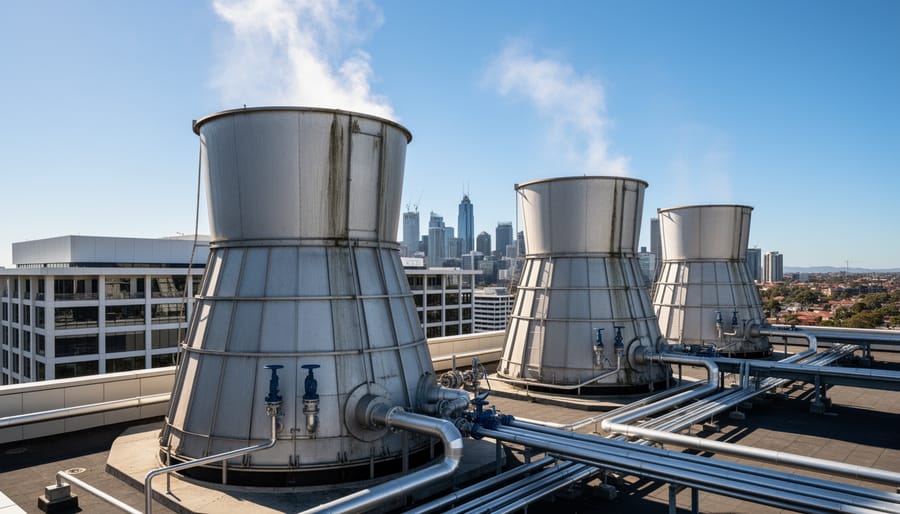
Temperature control represents another significant energy demand. Hot water systems for kitchens, bathrooms, and cleaning facilities consume substantial electricity or gas, while chilled water for cooling towers during our scorching summers adds another layer of energy intensity. In fact, cooling towers can use thousands of litres daily while simultaneously drawing power to operate fans and circulation systems.
Water treatment processes, both before consumption and after use, require filtration systems, UV purification, and wastewater processing, all powered by electricity. Even routine maintenance procedures like backwashing filters demand energy inputs.
For businesses focused on reducing energy and water costs, recognising these interconnected systems opens pathways to dual savings. By optimising water efficiency, you’re simultaneously trimming your energy bills and reducing your carbon footprint, creating a win-win scenario for both your bottom line and Australia’s environmental future.
Where Water Enables Energy Systems
Water plays a surprisingly central role in keeping our office buildings energy-efficient, particularly in Australia’s climate where cooling demands are significant. Understanding this connection helps us make smarter decisions about building operations.
Think of cooling towers as the hardworking heroes of commercial buildings across Sydney, Melbourne, and Brisbane. These structures use water evaporation to remove heat from air conditioning systems, consuming substantial amounts of both water and energy. When cooling towers operate inefficiently due to poor water quality or inadequate maintenance, they work harder, driving up electricity costs and water waste simultaneously.
HVAC systems represent the largest energy consumer in most Australian office buildings, and water is integral to their performance. Chilled water systems circulate water through buildings to provide cooling, while boilers use water for heating in cooler months. The energy required to pump, heat, or cool this water can account for 40-50% of a building’s total energy consumption.
Many forward-thinking Australian businesses are discovering that energy-water optimization strategies deliver dual benefits. By improving water treatment in cooling systems, buildings reduce scale buildup that hampers heat transfer efficiency. This means less energy needed to achieve the same cooling effect.
The opportunity here is substantial. A Melbourne office building recently reduced both energy and water use by 23% simply by optimizing their cooling tower operations and implementing smart water management systems. These aren’t complex changes requiring complete infrastructure overhauls, rather intelligent adjustments that recognize water and energy as interconnected resources requiring coordinated management.
The Real Cost of Inefficiency: What Australian Businesses Are Losing
Financial Drain on Your Bottom Line
For Australian commercial buildings, energy and water expenses represent a significant and often underestimated burden on operational budgets. On average, office buildings across Australia spend between $50,000 to $150,000 annually on energy alone, with water costs adding another $10,000 to $30,000 depending on building size and occupancy. What many facility managers don’t realize is that approximately 30-40% of this spending is completely avoidable.
The hidden connection between energy and water creates a double-hit on your bottom line. Every litre of water heated for your building’s amenities, cooling towers, or HVAC systems requires substantial energy input. In fact, heating water can account for up to 25% of a commercial building’s total energy consumption. When taps leak or cooling systems run inefficiently, you’re literally watching both energy and water dollars drain away simultaneously.
Common waste areas include outdated hot water systems running continuously, inefficient cooling towers that waste both water through evaporation and energy through poor performance, and aging HVAC systems that overconsume while underdelivering. Many buildings also overlook basic maintenance issues like leaking fixtures and poor insulation, which compound losses over time.
The encouraging news? These same waste areas represent your greatest opportunity for cost savings and environmental impact. By addressing the energy-water nexus strategically, Australian businesses are discovering 20-30% reductions in utility costs within the first year.
Environmental Impact in the Australian Context
Australia’s building sector contributes approximately 23% of the nation’s greenhouse gas emissions, making energy-efficient office buildings crucial to achieving our climate commitments. When we consider the energy-water nexus, this environmental impact deepens considerably. Traditional water systems in commercial buildings consume substantial electricity for pumping, heating, and treatment, creating a dual environmental burden that many facility managers overlook.
Our unique Australian challenges make this even more pressing. As the driest inhabited continent, we face intensifying water scarcity across major urban centres. Sydney, Melbourne, and Brisbane have all experienced severe restrictions in recent decades, and climate projections suggest more frequent droughts ahead. Every kilowatt-hour used to heat water or power cooling towers not only increases carbon emissions but also places additional strain on water treatment infrastructure during periods when these resources are most precious.
The encouraging news is that Australian businesses are increasingly recognising their role in this equation. Community-focused initiatives across the country demonstrate that optimising energy and water use simultaneously delivers measurable results. Buildings implementing integrated efficiency measures typically reduce carbon emissions by 30-40% while cutting water consumption by similar margins. This collective action creates ripple effects throughout our communities, inspiring neighbouring businesses and strengthening Australia’s position as a leader in sustainable building practices.
Smart Building Design: Energy Efficiency That Saves Water Too
Passive Design Principles for the Australian Climate
Getting passive design right from the start is one of the smartest moves Australian businesses can make when constructing or retrofitting office buildings. Rather than relying heavily on mechanical systems that consume both energy and water, passive design works with our unique climate to naturally regulate temperature and light.
Orientation is your foundation. In Australia’s diverse climate zones, positioning your building with the long axis running east-west maximises northern exposure, capturing winter sun while minimising harsh summer heat. This simple decision can reduce heating and cooling demands by up to 40 percent, directly lowering both electricity use and the water needed for cooling towers.
Natural ventilation transforms how we think about air conditioning. By strategically placing operable windows and incorporating cross-ventilation pathways, many Australian offices can rely on natural airflow for significant portions of the year. Commercial buildings in Brisbane and Perth have successfully reduced HVAC runtime by designing for prevailing breezes, cutting energy consumption and the associated water use in cooling systems.
Shading devices tailored to your latitude make an enormous difference. Horizontal eaves work brilliantly in northern Australia, while adjustable louvres suit southern regions where sun angles vary more dramatically. These features prevent heat gain before it penetrates the building envelope.
Thermal mass, using materials like concrete or brick, stabilises indoor temperatures by absorbing daytime heat and releasing it overnight. This natural temperature regulation is particularly effective in Australia’s hot-dry zones, reducing reliance on energy-intensive climate control systems. When communities of businesses embrace these principles together, we create precincts that demonstrate how intelligent design reduces environmental impact while maintaining comfortable, productive workspaces.
High-Performance HVAC Systems
Modern HVAC systems are transforming how Australian offices approach climate control while drastically reducing resource consumption. Today’s high-performance systems represent a game-changer for businesses committed to sustainability, combining smart technology with efficient design.
Variable refrigerant flow (VRF) systems have become increasingly popular across Australian commercial buildings, adjusting cooling and heating output based on actual demand rather than running at full capacity constantly. These systems can reduce energy consumption by up to 30% compared to traditional units while maintaining optimal comfort levels.
Evaporative cooling offers a particularly Australian advantage, using our climate to naturally cool spaces with significantly less energy than conventional air conditioning. When paired with smart sensors that monitor occupancy and temperature, these systems only operate when and where needed, eliminating wasteful overcooling of empty spaces.
The connection between HVAC efficiency and cooling system water consumption cannot be overlooked. Closed-loop water systems and advanced heat recovery technologies are helping forward-thinking businesses minimize water waste while maintaining peak performance.
Consider installing heat pump systems that provide both heating and cooling efficiently, or exploring geothermal options where feasible. Many Australian companies are discovering that upgrading HVAC systems delivers rapid payback through reduced utility bills while demonstrating genuine environmental leadership to clients and employees alike.
Smart Lighting and Its Ripple Effect
Switching to LED lighting isn’t just about cutting your electricity bill—it creates a surprising cascade of benefits that extend right through to your building’s water systems. When Australian offices replace outdated halogen or fluorescent lights with LEDs, they’re reducing heat output by up to 80 percent. That might not sound water-related at first, but here’s where it gets interesting.
Traditional lighting generates substantial heat, forcing your air conditioning to work overtime. When you install LEDs and maximise natural light through strategic window placement and light shelves, your cooling load drops dramatically. In Melbourne’s CBD, several office buildings have documented 15-20 percent reductions in cooling demand simply by upgrading their lighting systems. Less cooling means your chillers run less frequently, and those chillers rely heavily on water for heat rejection.
The ripple effect continues: cooler indoor temperatures from reduced lighting heat mean evaporative cooling systems consume less water, and cooling towers require fewer cycles. One Brisbane business park calculated they saved approximately 2 million litres annually after their LED retrofit, purely from reduced cooling tower operation. It’s a perfect example of how one sustainable choice triggers multiple environmental wins—less energy, less water, lower costs, and a more comfortable workspace for everyone.
Water Systems That Work Smarter, Not Harder
Efficient Plumbing and Fixtures
Simple upgrades to plumbing fixtures can deliver remarkable energy savings while reducing water consumption across Australian office buildings. When we heat less water, we use less energy—it’s that straightforward, and the impact on your bottom line can be significant.
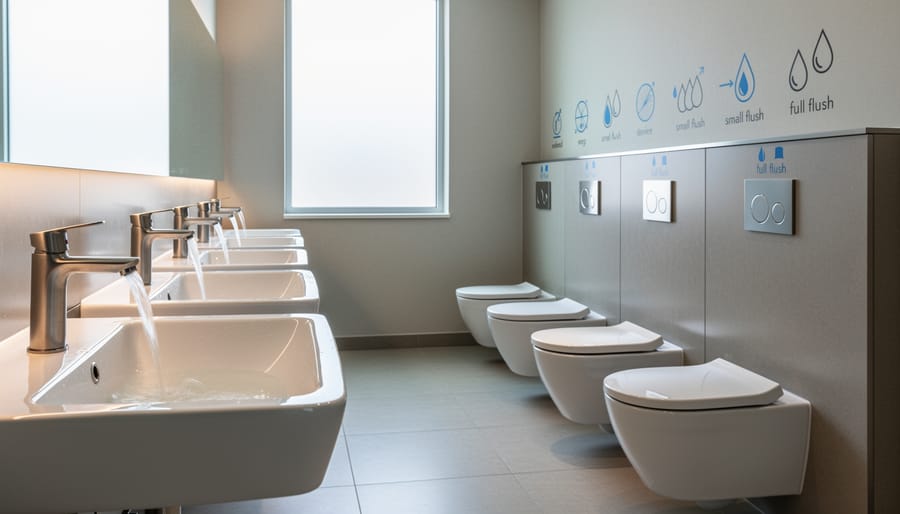
Low-flow taps and showerheads reduce water flow by up to 50% without compromising functionality, meaning your hot water systems work half as hard. For facilities with staff amenities, this translates to substantial reductions in both energy bills and greenhouse gas emissions. Dual-flush toilets, now standard in Australian homes, remain essential for commercial buildings too, offering a practical way to cut water use by approximately 67% compared to older single-flush models.
Sensor-activated taps have become game-changers in office bathrooms and kitchenettes. They eliminate water wastage from taps left running and reduce hot water demand by delivering water only when needed. Many Australian businesses report payback periods of under two years after installing these fixtures.
The beauty of efficient plumbing lies in its simplicity—once installed, these fixtures work continuously without requiring behaviour change from staff. They’re particularly effective in older buildings where replacing outdated fixtures often yields the quickest wins. Combined with regular maintenance to fix leaks promptly, efficient plumbing forms a cornerstone of any comprehensive energy-water optimisation strategy for Australian offices.
Rainwater Harvesting and Greywater Systems
Across Australia, forward-thinking businesses are discovering that rainwater harvesting and greywater systems offer a powerful double benefit: reducing both water consumption and energy use. The connection is straightforward yet often overlooked—every litre of mains water you avoid using also saves the energy required to pump, treat, and deliver it to your building.
Rainwater harvesting systems collect roof runoff for non-potable uses like toilet flushing, irrigation, and cooling tower makeup water. When designed thoughtfully, these systems minimise energy consumption through gravity-fed distribution or appropriately sized, energy-efficient pumps with variable speed drives. A commercial building in Melbourne’s Docklands recently reduced its mains water use by 40 percent while maintaining pump energy consumption at just 2 percent of total building energy use through smart system design.
Greywater systems, which capture water from hand basins and showers for toilet flushing or landscape irrigation, require careful treatment to ensure safety. Modern membrane bioreactors and UV treatment systems have become remarkably energy-efficient, often consuming less energy than the embedded energy saved in avoided mains water.
The key is right-sizing your infrastructure. Oversized pumps and treatment systems waste energy, while undersized equipment works overtime. Local water utilities across New South Wales, Queensland, and Victoria now offer rebates and technical guidance to help businesses optimise these systems for maximum water and energy savings.
Hot Water Systems That Don’t Break the Bank
Australian office buildings are discovering that smart hot water choices deliver impressive energy savings while keeping budgets healthy. Solar hot water systems have proven particularly effective across our sun-blessed continent, with commercial installations in Brisbane and Perth reporting energy reductions of up to 70% compared to conventional electric systems. The upfront investment typically pays itself back within 5-7 years through reduced electricity bills.
Heat pump water heaters are another game-changer, using ambient air temperature to heat water with roughly two-thirds less energy than traditional electric systems. They work brilliantly even in cooler southern cities like Melbourne and Hobart, where several office complexes have successfully transitioned entire buildings to heat pump technology.
Distribution efficiency matters just as much as production. Many Australian businesses are wrapping their hot water pipes with thermal insulation and installing timer controls to eliminate unnecessary heating during non-business hours. Point-of-use systems for kitchenettes reduce the energy wasted in long pipe runs, a simple switch that Melbourne’s Pixel Building implemented as part of their carbon-neutral design.
The beauty of these solutions is their scalability. Whether you manage a small suburban office or a city tower, there’s a cost-effective hot water approach that slashes energy consumption while supporting Australia’s renewable energy transition.
Technology and Monitoring: Making the Invisible Visible
Smart Meters and Building Management Systems
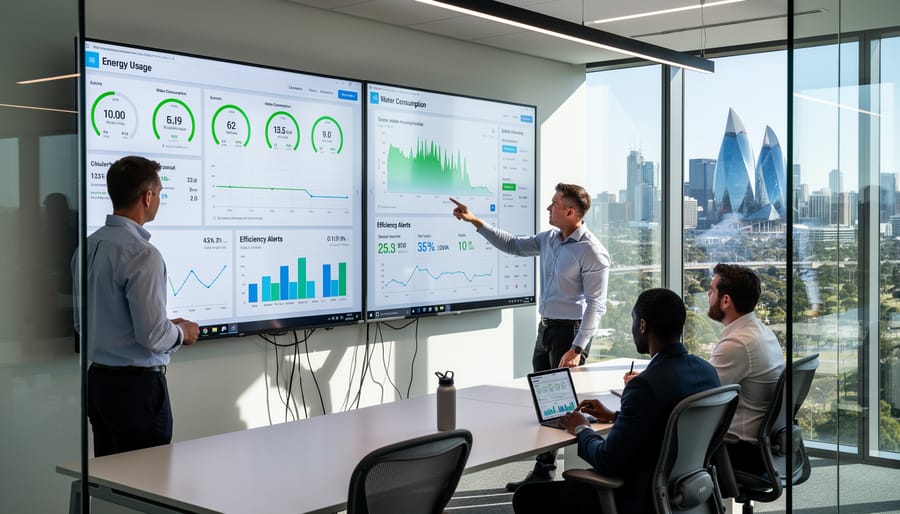
Real-time monitoring is transforming how Australian businesses manage their office buildings, offering unprecedented visibility into both energy and water consumption patterns. Modern smart monitoring technologies and building management systems work together to create a comprehensive picture of resource use, helping facility managers identify inefficiencies and opportunities for improvement.
These systems track everything from HVAC performance to water flow rates, providing detailed data down to individual zones or equipment. When your cooling tower uses excessive water, you’ll know immediately. When a toilet leak wastes hundreds of litres overnight, you’ll receive an alert. This instant feedback allows teams to respond quickly, preventing small issues from becoming costly problems.
The beauty of integrated monitoring is how it reveals the energy-water connection. By tracking both simultaneously, you can see exactly how reducing hot water use impacts your energy bills, or how optimising cooling tower cycles affects both utilities. Many Australian businesses report savings of 15-30% within the first year simply by identifying and addressing issues they didn’t know existed. Better yet, these systems provide the data needed to engage staff and celebrate progress as your building becomes more sustainable.
Predictive Maintenance and Leak Detection
Smart building technology is revolutionising how Australian businesses prevent energy and water waste before it occurs. Predictive maintenance systems use sensors and artificial intelligence to monitor equipment performance in real-time, identifying inefficiencies like aging pump seals or partially blocked pipes that drain energy through increased pressure requirements.
Melbourne’s Docklands precinct has embraced this approach, with several commercial buildings now using IoT sensors to detect even minor water leaks that would otherwise go unnoticed for months. These systems alert facility managers instantly when water flow patterns suggest a problem, preventing both water waste and the substantial energy cost of pumping, heating, or cooling water that simply disappears into walls or underground.
Sydney-based property management companies are reporting impressive results too. One portfolio reduced their combined energy-water costs by 18 percent after implementing predictive analytics that flagged failing hot water systems and cooling tower inefficiencies weeks before complete breakdown. The beauty of this technology is its snowball effect: early intervention means smaller repairs, less downtime, and significant savings that fund further sustainability upgrades. For businesses hesitant about upfront costs, many Australian providers now offer monitoring-as-a-service models, making predictive maintenance accessible to buildings of all sizes.
Getting Started: Practical Steps for Australian Businesses
Conducting an Energy-Water Audit
Understanding where your office building stands is the essential first step towards meaningful improvement. An energy-water audit doesn’t have to feel overwhelming—think of it as a health check for your building that reveals opportunities to save money while helping the environment.
Start by gathering your energy and water bills from the past 12 months. This data reveals patterns you might not notice day-to-day. Many Australian businesses are surprised to discover that heating and cooling water accounts for up to 30% of their total energy consumption.
Next, walk through your building with fresh eyes. Check for obvious culprits like dripping taps, running toilets, or hot water systems set unnecessarily high. Document your HVAC systems, lighting, and how water is used across bathrooms, kitchens, and cooling towers. These insights become your baseline for improvement.
Consider engaging professionals for a comprehensive assessment. Organisations across Sydney, Melbourne, and Brisbane have found that professional auditors often identify opportunities that deliver 20-30% savings—opportunities that weren’t obvious at first glance.
The most effective audits involve your team too. Speak with staff about their daily experiences. They often know which rooms run too hot, which taps waste water, or where equipment runs unnecessarily. This collaborative approach builds the community support you’ll need when implementing changes, transforming energy efficiency from a management initiative into a shared workplace value.
Accessing Australian Government Incentives and Support
Australian businesses have access to valuable government support to help offset the costs of energy efficiency upgrades. The federal government offers the Energy Efficient Communities Program, providing grants for commercial building improvements including efficient water heating systems and HVAC upgrades that reduce both energy and water consumption.
State-based initiatives complement these federal programs. Many Australian states offer rebates through their energy providers for businesses implementing water-efficient cooling systems and energy management technologies. The Small-Scale Technology Certificates scheme can help reduce upfront costs for solar hot water systems, which significantly impact both energy and water efficiency.
Local councils across Australia are increasingly partnering with businesses through sustainability programs that provide technical assessments and financial incentives. These community-focused initiatives often include free energy-water audits and tailored advice for office buildings.
Taking advantage of these programs isn’t just financially smart—it demonstrates leadership in your community’s transition to sustainable operations. Contact your state energy authority and local council to discover what support is currently available in your area. Acting now ensures you benefit from existing programs while contributing to Australia’s energy-water efficiency goals.
Building Your Business Case
Presenting energy efficiency upgrades to stakeholders requires a clear, compelling business case that speaks their language. Start by calculating your Return on Investment (ROI) using local Australian utility rates and available government rebates. Many facility managers find success by highlighting quick wins first—like LED lighting retrofits or water-efficient cooling towers—which typically pay for themselves within two years while demonstrating commitment to sustainability.
When prioritizing improvements, consider both financial and environmental impacts. Create a simple matrix comparing upfront costs, annual savings, and carbon reduction potential. Remember, Australian businesses increasingly value projects that align with community expectations around climate action. Include metrics stakeholders care about: reduced operating costs, improved tenant comfort, and enhanced property value. Don’t forget to factor in state-specific incentives and the Australian Government’s Climate Active certification benefits. Share success stories from similar organizations in your region—seeing local businesses achieve tangible results builds confidence and creates momentum. Your colleagues will appreciate transparency about payback periods and ongoing maintenance requirements, making approval more likely.
Success Stories: Australian Businesses Leading the Way
Australian businesses are proving that integrated energy-water efficiency isn’t just good for the planet—it’s excellent for the bottom line. These pioneering organisations are showing what’s possible when sustainability becomes a strategic priority.
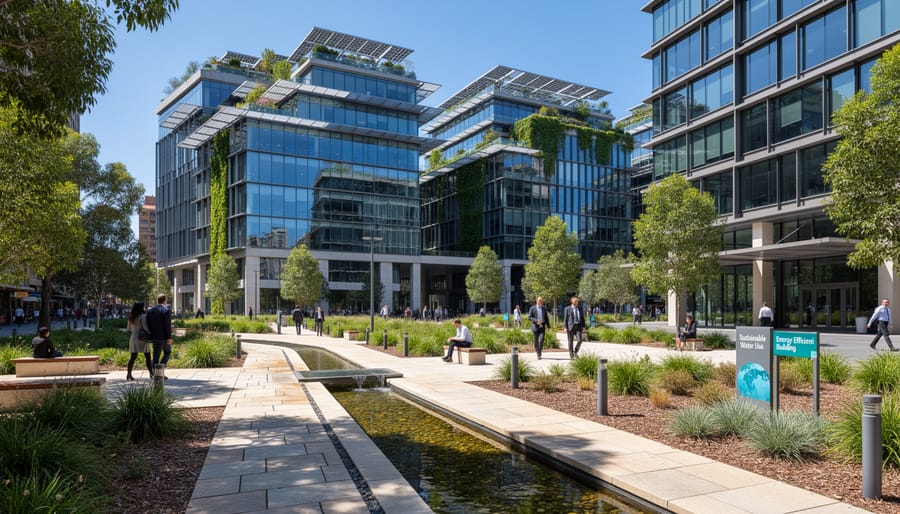
Melbourne’s 550 Lonsdale Street stands as a shining example of what commercial buildings can achieve. This 21-storey office tower underwent a comprehensive retrofit that transformed both its energy and water performance. The building management installed a rainwater harvesting system that captures roof runoff for toilet flushing and cooling tower operations, reducing mains water consumption by 40 percent. Simultaneously, they upgraded to an energy-efficient chiller system that works in harmony with the new water infrastructure. The result? Annual savings of over $180,000 across combined utility bills and a 35 percent reduction in greenhouse gas emissions. Tenants have reported higher satisfaction levels, and the building now commands premium rental rates, proving that sustainability attracts quality businesses.
In Brisbane, the RSPCA Queensland headquarters demonstrates how smaller-scale operations can achieve remarkable results. Their 3,500-square-metre facility integrated smart water management with solar energy systems, recognising the dual efficiency benefits of treating both resources together. By installing a greywater recycling system for their animal care facilities and coupling it with energy-efficient pumps and heat recovery systems, they’ve cut water use by 60 percent and energy consumption by 45 percent. The organisation now saves approximately $35,000 annually, funds they’ve redirected toward their animal welfare programs. Their success has inspired other Queensland charities to follow suit, creating a ripple effect throughout the community sector.
These stories highlight a crucial truth: energy-water efficiency projects deliver measurable financial returns while strengthening community connections. Both buildings have become educational hubs, hosting tours for local businesses eager to learn from their experiences. They’ve proven that Australian organisations of any size can lead the way, transforming sustainability from an abstract goal into tangible action that benefits everyone—from employees and customers to the wider community and environment we all share.
The opportunity sitting before Australian businesses right now isn’t just significant—it’s urgent. As our climate continues to shift and resource pressures intensify, the window to act on energy-water optimization is wide open, but it won’t remain that way indefinitely. The remarkable news? Every step you take toward improving your building’s efficiency delivers immediate rewards while contributing to something far greater than any single business.
Think about what’s truly at stake here. When your office building reduces its energy and water consumption through smart optimization, you’re not simply trimming operational costs or meeting compliance requirements. You’re actively participating in Australia’s transition toward a sustainable future, setting an example that ripples through your industry, your community, and beyond. Every kilowatt-hour saved, every litre conserved, represents a tangible contribution to preserving the resources our children and grandchildren will depend upon.
The businesses already pioneering these changes across Australia are discovering something powerful: sustainability and profitability aren’t opposing forces. They’re natural partners. Your colleagues in Melbourne, Sydney, Brisbane, and Perth are proving that energy-water optimization creates competitive advantages while strengthening community resilience.
So where do you start? Begin with one meaningful change—perhaps an energy audit, upgrading to efficient fixtures, or installing smart monitoring systems. Connect with other Australian businesses on this journey. Share your learnings, celebrate your wins, and support others taking their first steps.
The transformation of Australia’s built environment begins with decisions made by people like you, in buildings just like yours. The technology exists, the expertise is available, and the community is ready to support you. Now it’s time to turn intention into action. Your building’s efficiency journey starts today.